
5 Best Patio Cleaners for Natural Stone: 2026 Guide
Table of Contents
How We Evaluated These Patio Cleaners
Quick Comparison: 5 Patio Cleaners for Natural Stone
1. Biocidal Pretreatment: The First Step Before Any Cleaning
2. Removing Black Spot from Sandstone: Why It Needs Specialist Treatment
3. Professional Patio Cleaning Services: When DIY Is Not Enough
4. Natural Stone Patio Maintenance: Keeping Paving Cared For
5. Sealing: The Finishing Step That Protects Natural Stone
Frequently Asked Questions
Last Updated: September 21, 2026
How We Evaluated These Patio Cleaners
Natural stone is not a surface you can treat casually. Indian sandstone, limestone and other natural stones are porous and variable, so the wrong patio cleaner can dull the finish, bleach the colour or leave streaks that are difficult to reverse. This guide from SavingPaving looks at the five approaches that genuinely work on natural stone, and explains where each one fits.
We judged each option on four things:
Suitability for natural stone - whether the method respects a porous, variable surface
What it actually removes - general dirt, algae, black spot, lichen or staining
Risk to surroundings - plants, fencing, lawns and nearby surfaces
When it is the right call - and when it is not
The honest answer is that no single product solves every problem. Most natural stone patios need a combination of treatments: a pretreatment, a clean, and often a jointing or sealing stage afterwards.
Quick Comparison: 5 Patio Cleaners for Natural Stone
Approach | Best For | Main Limitation | Typical Stage |
Biocidal pretreatment | Moss, algae, early growth | Needs dwell time to work | Before cleaning |
Black spot treatment | Black spot on sandstone | Slow-acting, may need repeats | After pretreatment |
Professional cleaning service | Heavily soiled or neglected stone | Requires a site survey | Main clean |
Maintenance programme | Keeping paving cared for | Does not include deep cleaning | Ongoing |
Protecting restored stone | Only where suitable | Finishing step |
1. Biocidal Pretreatment: The First Step Before Any Cleaning
Biocidal pretreatment is the application of a suitable treatment to kill moss, algae and lichen before any cleaning begins. Skipping this stage is the most common mistake homeowners make. Pressure alone strips the growth back but leaves roots and spores behind, and regrowth follows.
The process is straightforward but not instant. A treatment is applied, then left to dwell so it can work on the growth. Only after that does cleaning start. On natural stone, this order matters: it means less aggressive cleaning is needed, which is gentler on the surface.
Pro Tip A common mistake is treating and cleaning on the same day. The treatment needs time to act, so rushing it usually means the growth comes back sooner.
2. Removing Black Spot from Sandstone: Why It Needs Specialist Treatment
Removing black spot from sandstone is rarely a one-pass job. Black spot is a lichen that colonises suitable paving surfaces, and it is not caused by failed joints. It embeds itself in the stone's surface, which is why ordinary washing often leaves it behind.
A suitable black spot treatment is applied and given time to work, sometimes with more than one application depending on how established it is. This is a specialist step, not a general cleaner. On Indian sandstone in particular, the treatment has to be matched to the stone so the colour and finish are not affected.
3. Professional Patio Cleaning Services: When DIY Is Not Enough
Professional patio cleaning services exist because natural stone punishes guesswork. Harsh pressure can mark the surface, and the wrong chemical can strip colour. A professional clean uses equipment, pressure and products selected to suit the paving and its condition.
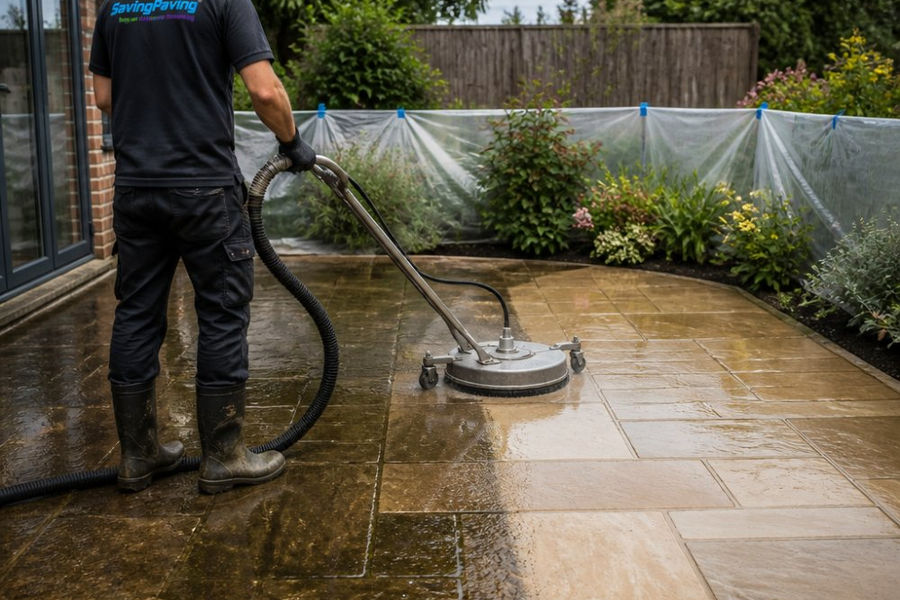
At SavingPaving, every job starts with a free site survey. We identify the paving, assess its condition and check whether joints or bedding need attention before cleaning begins. That survey also tells us whether restoration is realistic or whether replacement may be the better route.
4. Natural Stone Patio Maintenance: Keeping Paving Cared For
Natural stone patio maintenance is routine aftercare carried out after cleaning or restoration, not a substitute for it. Its purpose is to keep paving looking cared for and to reduce the build-up of moss, algae, lichen and weeds.
A typical programme involves a visit roughly every six months to sweep or blow away debris, reapply a suitable biocidal treatment and target early regrowth. It does not automatically include deep cleaning, repairs, repointing, re-sanding or sealing. Those are separate services, completed only when required and agreed.
5. Sealing: The Finishing Step That Protects Natural Stone
Sealing is the final stage, and only where it suits the stone. A suitable sealer can help protect restored natural stone and make it easier to keep clean. It is not a fix for poor drainage or failing bedding, and it does not make a surface waterproof.
Two-part resin jointing is a separate matter. It suits stable paving with properly prepared joints, and suitability depends on the paving, joint dimensions, drainage and site conditions. Where slabs are loose, rocking or sunken, they need to be lifted and relaid first. Jointing does not secure inadequately bedded paving.
Frequently Asked Questions
Can I use standard patio cleaners on natural stone?
Not all of them. Many off-the-shelf patio cleaners contain strong acids or bleach that can dull or discolour sandstone, limestone and other natural stone. Always check the label for stone suitability and test a small hidden area first. For Indian sandstone and similar surfaces, a pH-neutral cleaner or a suitable biocidal treatment is usually safer. If you are unsure, a professional patio cleaning service can assess the stone and recommend the right approach.
What is the best way to remove black spot from Indian sandstone?
Black spot is a lichen that colonises the surface of suitable paving and is not caused by failed joints. It needs a specialist treatment rather than ordinary detergent. A biocidal product applied after cleaning, with enough dwell time to work, is the usual approach. Because the growth can return over time, removing black spot from sandstone often works best as part of a wider restoration plan that includes appropriate sealing and ongoing maintenance.
Is pressure washing safe for all types of natural stone?
No. Pressure washing can be safe when the pressure, nozzle and technique suit the paving, but natural stone varies in hardness and porosity. Too much pressure or the wrong method can leave marks or damage the surface. A professional operator will adjust the equipment to the stone and its condition. If you have tried pressure washing yourself and left stripes, a specialist clean can often improve the appearance, though some marks may need assessment.
How often should I have my natural stone patio professionally cleaned?
There is no fixed schedule, as it depends on shade, tree cover, moisture and how the patio is used. Many homeowners choose a professional clean every one to two years, with a lighter maintenance visit in between. A six-monthly maintenance programme that sweeps debris and reapplies a suitable biocidal treatment can help reduce the build-up of moss, algae and weeds and keep the paving looking cared for.
Natural stone rewards the right method and punishes shortcuts. If your patio has black spot, stubborn growth or tired joints, the sensible first step is an honest assessment rather than another bottle of cleaner. SavingPaving offers a free site survey and detailed quotation, with specialist cleaning, black spot removal and sealing carried out by uniformed, fully insured operatives and no hidden costs. Get started with SavingPaving and see your natural stone restored to how it should look.
Request a free site survey and no-obligation detailed quotation