
Best Black Spot Remover for Indian Sandstone (2026)
Table of Contents
What Causes Black Spot on Indian sandstone
Choosing a Black Spot Remover for Indian Sandstone
How to Clean Lichen Off Natural Stone Safely
Frequently Asked Questions
Last Updated: September 16, 2026
What Causes Black Spot on Indian sandstone
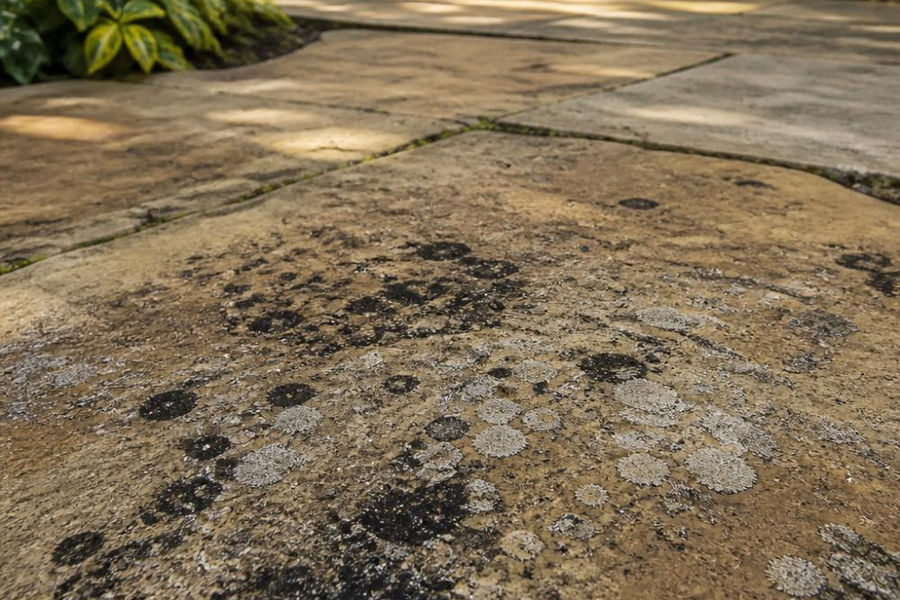
Black spot is a living growth, a cyanobacterium that colonises Indian sandstone where moisture lingers. It is not caused by failed joints.
Open joints may collect debris and support moss and weeds, but they are not the sole cause. Indian sandstone is porous and textured, holding the damp film black spot and lichen need.
A black spot remover formulated for natural stone, applied correctly, can lift both growths without damaging the paving beneath, though off-the-shelf spray-and-rinse products rarely hold up.
Choosing a Black Spot Remover for Indian Sandstone
The best black spot remover for Indian sandstone is a biocidal treatment designed for natural stone, not a general-purpose patio cleaner or bleach-based spray. Suitability depends on the stone, the growth and the surrounding planting.
A product that works is formulated for natural stone (acidic cleaners can dull sandstone), is biocidal rather than just a detergent, and is applied with the right dwell time. A pressure washer and supermarket cleaner can often leave stripes and may not effectively remove black spot, as the growth sits in the surface.
A professional approach follows a sequence: survey and identify the paving, pretreat where required, allow suitable dwell time, clean professionally, apply a suitable black spot or lichen treatment, remove failed pointing, lift and relay loose or sunken slabs where necessary, repoint or install suitable jointing, and seal only where appropriate and agreed. Not every patio needs every stage, and the order can shift once we have seen the surface. Our black spot removal service is built around that assessment-first approach.
Stage | What It Addresses | Why It Matters |
Survey and identify paving | Stone type, condition, growth severity | Determines which treatments are suitable |
Biocidal pretreatment | Black spot and lichen at the root | Cleaning alone will not remove growth |
Lifting and relaying | Loose, rocking or sunken slabs | Jointing cannot fix inadequate bedding |
How to Clean Lichen Off Natural Stone Safely
Lichen comes off natural stone safely with a biocidal treatment, adequate dwell time, and a cleaning method matched to the stone. Pressure alone will not do it, and harsh chemicals can damage the paving and garden.
Homeowners want the lichen gone but worry about plants, fences, windows and lawns, a well-placed worry. A treatment suitable for the paving is not automatically safe for surrounding material, so both must be considered together.
The sequence we follow for slabbed patios, natural stone and crazy paving is: survey and identify the paving; pretreat where required and allow suitable dwell time; clean professionally; apply a suitable black spot or lichen treatment where needed; remove failed pointing; lift and relay loose or sunken slabs where necessary; repoint or install suitable jointing; and seal only where appropriate and agreed.
A professional clean uses pressure, equipment and chemicals selected to suit the paving and its condition, not a single setting applied across the whole surface.
One honest caveat: treatment, jointing and sealing may reduce growth, but none can guarantee permanent prevention. Any patio in a damp, shaded position will need ongoing attention, which is why we offer six-monthly aftercare and biocidal maintenance, where suitable.
For patios where the pointing has genuinely failed, repointing is the correct term rather than regrouting, which is associated with tiles. Slabbed patios, natural stone and crazy paving may be repointed or resin-jointed depending on their construction and condition. Where slabs are loose, rocking or sunken, they need to be assessed and, where appropriate, lifted and relaid before any jointing is considered. Jointing does not secure inadequately bedded paving.
Indian sandstone that has gone black with growth is not a lost cause, but it needs the right diagnosis before the right product. If you are unsure whether your patio needs treatment, repointing, repairs or something more involved, the sensible first step is a proper look at the surface. SavingPaving offers a free site survey and detailed quotation across South Croydon, Bromley and surrounding areas, with a small team of uniformed, fully insured operatives and no hidden costs.
Frequently Asked Questions
What causes black spots on Indian sandstone?
Black spot is a common surface growth that colonises the porous face of Indian sandstone, particularly in shaded or damp areas. It is not caused by failed joints, although open joints can collect debris that supports moss and weeds nearby. Because it sits on the surface rather than in the stone, a suitable biocidal treatment followed by professional cleaning can often lift it. A site survey confirms whether the paving is suitable for treatment or needs further assessment.
Are all black spot removers safe for natural stone?
No. Some patio cleaners are too aggressive for Indian sandstone and can affect its appearance or surrounding plants, fencing and lawns. Suitability depends on the paving, its condition and the product instructions. A correctly specified remover applied after a biocidal pretreatment, with suitable dwell time and rinsing, may remove growth without harming the stone. SavingPaving assesses each patio before recommending any treatment.
How do I prevent black spots from returning to my patio?
Prevention focuses on reducing the damp, shaded conditions black spot prefers. Keeping joints in good order, removing debris and considering a suitable sealer where the paving allows can help. No treatment guarantees permanent prevention, so periodic aftercare, such as a biocidal maintenance wash, keeps growth in check. SavingPaving offers six-monthly aftercare and can advise on a maintenance plan following restoration.
Request a free site survey and no-obligation detailed quotation