
Decking Cleaning Near Me: Restore Your Garden Deck
Updated: 6 days ago
Table of Contents
Why Professional Decking Cleaning Beats a DIY Jet Wash
What Does Decking Pressure Washing Cost?
The Real Cost Comparison: DIY vs. Professional
When DIY Makes Sense
The Hidden Cost of Skipping Aftercare
The SavingPaving Decking Cleaning Process
Soft Washing vs High-Pressure Cleaning
Timber vs Composite: Material-Specific Decking Cleaning
The Best Decking Cleaning Products and Why They Matter
Decking Maintenance Tips to Protect Your Investment
A Year-Round Decking Care Calendar
Material-Specific Maintenance
The 60-Second Weekly Check
When to Call in a Professional
Serving London and the South East with Free Site Surveys
Conclusion: Get Your Deck Restored Today
Frequently Asked Questions
Last Updated: September 5, 2026
Why Professional Decking Cleaning Beats a DIY Jet Wash
Most homeowners searching for decking cleaning near me have tried the DIY route first, hiring a pressure washer for the weekend and ending up with stripes, etched timber, and water forced between the boards.
Professional decking cleaning removes algae, moss, and grime using controlled techniques that protect the surface. The difference between a rented jet washer and a trained operator comes down to pressure control, the right cleaning solutions, and knowing how each material responds. At SavingPaving, we have restored countless garden decks across London and the South East since 2001.
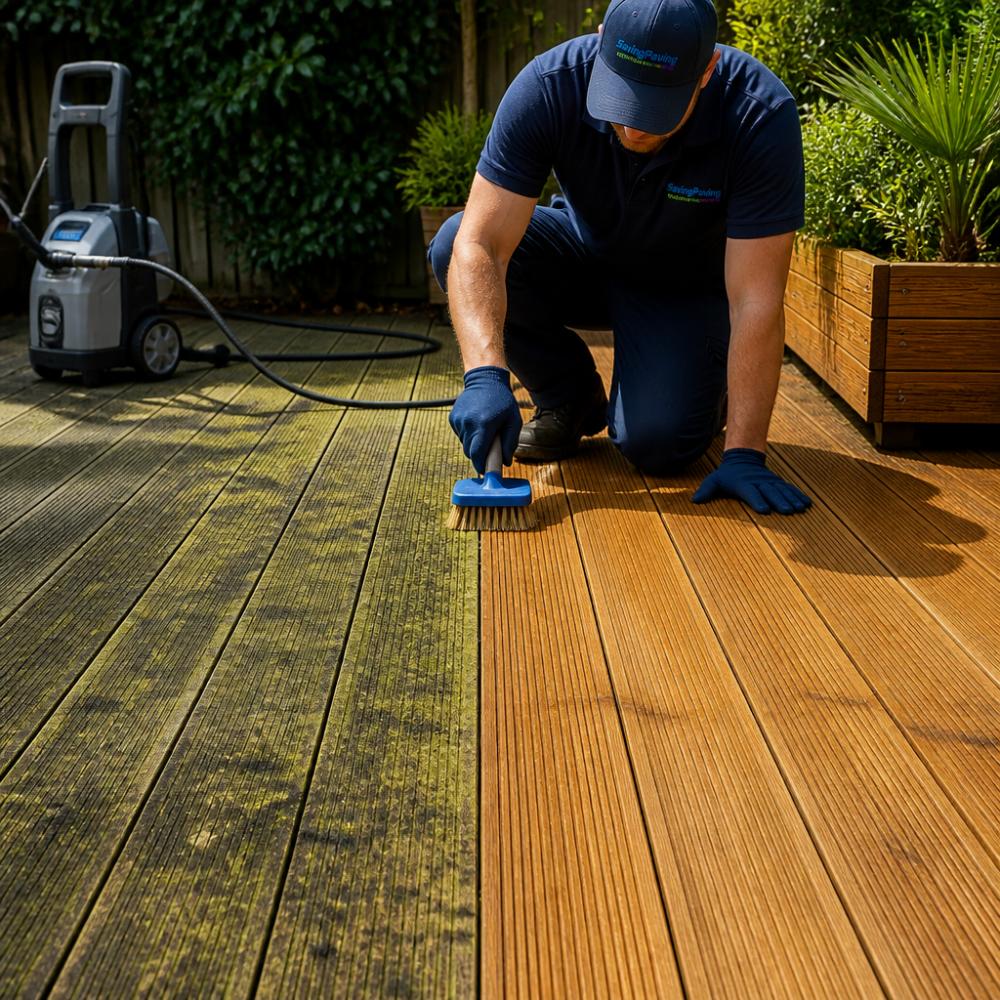
The core problem with DIY jet washing is simple: most domestic machines run at pressures far too high for soft timber. Holding the lance too close blasts away the soft grain, leaving a fuzzy surface that re-absorbs dirt faster than before. Professional equipment allows precise control, and experienced operators know when to switch to soft washing entirely.
What Does Decking Pressure Washing Cost?
Pricing for decking pressure washing varies considerably depending on the size of your deck, the material, and the level of contamination. Rather than quoting a flat rate that may not reflect your situation, we recommend requesting a free detailed quote so you know exactly what your project involves.
Several factors influence the final cost of professional decking cleaning:
Deck size and number of decking boards
Whether the surface is timber or composite
Severity of algae, moss, and black spot growth
Access to the garden and water supply
Whether sealing or staining is required afterwards
The Real Cost Comparison: DIY vs. Professional
Most homeowners searching for decking cleaning near me assume the DIY route is cheaper. A weekend hire of a pressure washer might cost £60-£90, plus fuel and your own time. But the true cost of DIY is rarely the hire fee, it is the damage done to the deck itself.
A common pattern is a homeowner hiring a 150-170 bar machine, holding the lance just a few centimetres from the boards, and blasting away the soft grain of their pine or cedar deck. Within months, the deck looks worse than before, and the only remedy is sanding, or replacing the boards entirely.
A typical 20 m² softwood deck can be costly to replace, and even a single damaged board cannot be repaired once the grain is blasted away. Professional cleaning uses controlled low pressure and biocide treatments that preserve the timber surface, extending the life of the deck by years.
When DIY Makes Sense
DIY is perfectly reasonable if your deck is composite, less than three years old, and only has light surface dirt, a garden hose with a soft brush attachment and mild detergent may suffice. Similarly, a small softwood deck with no visible algae or moss can be maintained with regular sweeping and an occasional gentle wash.
The decision point comes when you see green algae, black spot, or moss. These growths root deep into the grain, and surface washing alone will not remove them. Without a biocide treatment to kill the growth at the root, the algae returns within weeks.
The Hidden Cost of Skipping Aftercare
A professionally cleaned deck that is then sealed or oiled will resist algae for far longer than an untreated surface. The cost of a good decking oil or sealant is modest compared to replacing boards prematurely.
At SavingPaving, we include a free site survey with every enquiry, and we welcome detailed questions about your deck before any work begins. We will assess the material, the severity of the growth, and the access to your garden, then provide a detailed quote that reflects your specific situation, no hidden costs, no surprises.
Key Takeaway Professional decking cleaning costs less than replacing worn boards, and it protects the timber from the ongoing damage caused by trapped moisture and organic growth. If your deck has visible algae, moss, or black spot, the DIY window has already passed.
The SavingPaving Decking Cleaning Process
Our process begins with a free site survey, where we assess the condition of your decking, identify the material, and check for damaged boards or loose fixings. This matters because the right approach for softwood differs from hardwood or composite.
We then apply a biocide treatment to kill algae, moss, and black spot at the root. This sits on the surface for a set period, breaking down the organic matter so it lifts away cleanly. Only after this treatment do we wash the surface, using the lowest effective pressure to avoid damaging the timber grain.
Soft Washing vs High-Pressure Cleaning
Soft washing uses low pressure combined with specialist cleaning solutions to remove organic growth without eroding the surface. High-pressure cleaning relies on force alone and is rarely appropriate for decking, which is far softer than block paving or concrete.
For most garden decks, soft washing is the safer choice. It cleans deep into the grain where algae spores hide, without forcing water between the boards or etching the timber. This is why professional cleaning delivers a stripe-free finish, while DIY jet washing often leaves permanent marks.
Timber vs Composite: Material-Specific Decking Cleaning
Timber and composite decking require fundamentally different cleaning approaches; treating both the same way is one of the most common errors we see.
Timber is porous and absorbs both water and cleaning agents. It responds well to biocide treatments followed by gentle washing, then needs time to dry before oil or stain is applied. Hardwoods such as oak or ipe are denser and tolerate slightly more pressure, but softwoods like cedar or pine demand a delicate touch.
Composite decking is manufactured from wood fibres and plastic, making it less absorbent but prone to mould and algae growing in the tiny gaps between boards. Composite should never be jet washed at high pressure, as this can roughen the surface and void the manufacturer's warranty. A soft wash with a dedicated composite cleaner is recommended.
Material | Common Problem | Best Cleaning Method | Aftercare |
Softwood timber | Green algae, black spot, moss | Biocide treatment + soft wash | Oil or stain after drying |
Hardwood timber | Grey weathering, mildew | Gentle pressure + cleaner | Decking oil to restore colour |
Composite | Mould between boards | Soft wash + composite cleaner | None required, low maintenance |
The Best Decking Cleaning Products and Why They Matter
The best decking cleaning products kill organic growth at the root without damaging the timber or surrounding plants. A quality biocide, often sodium hypochlorite based, breaks down algae and moss so they can be rinsed away rather than scrubbed off.
Bleach-based products work quickly but can lighten timber unevenly and harm nearby lawns. Oxygen-based cleaners are gentler but less effective on established black spot. The right choice depends on the material and severity of the growth, which is why professional assessment makes a real difference.
Watch Out Avoid using a jet washer with just water and no cleaning agent. Without a biocide treatment, you only remove the visible surface growth, leaving the roots intact. The algae returns within weeks, often worse than before.
Run-off from decking cleaning can enter flower beds and lawns, so products need to be chosen with care. Professional operators use treatments that are effective on the deck but safe for surrounding planting, fences, and windows.
Decking Maintenance Tips to Protect Your Investment
Regular decking maintenance keeps your deck looking good and prevents costly repairs. The single most important habit is keeping the surface clear of fallen leaves and debris, which trap moisture and create the perfect conditions for algae and moss.
A Year-Round Decking Care Calendar
Most decking problems develop because maintenance is reactive rather than planned. A seasonal schedule works well for most gardens and dramatically reduces the need for intensive cleaning:
Spring (March-May): Inspect for winter damage, including lifted boards, popped fixings, and areas where water has pooled. Treat any early algae growth with a biocide wash before it establishes. This is also the best time to apply a fresh coat of decking oil or sealant, as the timber has dried out over winter and will absorb the treatment evenly.
Summer (June-August): Sweep the surface weekly to remove grit that can scratch the surface underfoot. Clean spills promptly, barbecue grease and plant food stains are particularly stubborn once they dry. Move plant pots regularly to prevent circular stains and trapped moisture beneath the bases.
Autumn (September-November): Clear fallen leaves at least weekly, as leaf mulch is the single fastest way to create black spot on timber. Trim overhanging branches to reduce leaf fall and increase airflow across the deck surface. Check that drainage gaps between boards are clear of debris.
Winter (December-February): Remove standing water after heavy rain or snow, especially in shaded corners. Avoid using salt or grit on decking, as these can stain timber and corrode composite surfaces. If you have furniture on the deck, raise it on pads to allow airflow underneath.
Material-Specific Maintenance
The calendar above applies to all decks, but the details differ by material:
Softwood timber (pine, cedar, spruce): Requires the most attention. Oil or seal every 12-18 months. Softwoods are porous and will absorb moisture quickly if left untreated, leading to warping and splitting.
Hardwood timber (oak, ipe, balau): Denser and more rot-resistant, but prone to greying and silvering from UV exposure. A hardwood-specific oil every 18-24 months restores colour and prevents surface cracking.
Composite decking: Low maintenance but not no-maintenance. Mould can grow in the tiny gaps between boards, especially in shaded, damp gardens. A soft wash with a composite-safe cleaner twice a year prevents this. Never use a jet washer on composite, it can roughen the surface and void the manufacturer's warranty.
The 60-Second Weekly Check
A quick weekly inspection takes less than a minute and catches problems early. Look for boards that feel springy or loose underfoot, fixings that have popped proud of the surface, and dark patches that signal the start of algae or mould. Catching these early means a simple fix rather than a full board replacement.
When to Call in a Professional
Even with diligent maintenance, every deck eventually needs a deeper clean. Algae spores are everywhere in the British climate, and they will find their way into the grain of even the best-maintained timber. If regular sweeping and washing no longer shifts the green tinge, or black spot has appeared between the boards, it is time for a professional biocide treatment and soft wash.
At SavingPaving, we provide decking cleaning across London and the South East, including Kent, Surrey, Essex, and Sussex. We offer free site surveys and welcome detailed questions before any work begins, and will recommend a maintenance schedule tailored to your garden's conditions.
Pro Tip Keep a simple log of when you last oiled or sealed your deck. Most people forget, and by the time the timber looks dry and grey, the protective layer has long since worn away. A note on your phone calendar is all it takes.
Serving London and the South East with Free Site Surveys
SavingPaving provides professional decking cleaning across London and the South East, including Kent, Surrey, Essex, Sussex, and surrounding areas. We offer free site surveys and welcome detailed questions before any work begins.
Our team is uniformed and fully insured, with many five-star reviews. Local homeowners want a service they can rely on, with no hidden costs and no surprises once the job starts.
If your deck has black spot, moss, or algae that will not shift, contact us through our website form to arrange a free, no-obligation survey. We will assess your decking, explain the best cleaning approach for your material, and provide a detailed quote before any work is carried out.
Conclusion: Get Your Deck Restored Today
Restoring a tired, green-stained deck is one of the most satisfying home improvements you can make. The difference between a neglected surface and a professionally cleaned one transforms how your garden feels and how your property looks.
SavingPaving has been restoring outdoor spaces since 2001, and we know how to bring decking back to life without damaging the timber. Our soft washing approach is safe for paving, plants, fences, windows, and lawns, and the stripe-free finish we deliver is backed by years of experience and many satisfied customers.
If you are searching for decking cleaning near me and want a result that lasts, get in touch. Request your free site survey through our contact form and let us show you what professional decking cleaning can achieve for your garden.
Frequently Asked Questions
How much do people charge to power wash a deck?
Pricing for professional decking cleaning varies significantly based on the size of your deck, its condition, and the cleaning method required. Rather than a fixed rate, reputable companies like SavingPaving assess the level of moss, algae, and staining first. We recommend requesting a free, no-obligation quote for an accurate figure. This ensures you are paying for the specific work your deck needs, not a generic price that may not cover the full restoration process.
What is the best way to clean decking without damaging the wood?
The safest and most effective method is professional soft washing. This technique uses low pressure combined with specialised, eco-friendly cleaning solutions to kill algae, moss, and black spot at the root without eroding the timber's surface. High-pressure jet washing by untrained hands can gouge the wood, force water into the grain, and leave unsightly stripes. Professionals also know the correct distance and nozzle angle to protect surrounding plants, fences, and windows.
How often should decking be professionally cleaned and sealed?
For most timber decks in the UK climate, we recommend a professional clean and re-seal every 12 to 18 months. This preventative maintenance schedule stops green algae and black spot from taking hold and extends the lifespan of your decking boards. Composite decking generally requires less frequent sealing but benefits from an annual deep clean to remove ingrained grime. Regular maintenance is far more cost-effective than replacing damaged boards or carrying out a full restoration.
What is the difference between a professional decking service and hiring someone with a pressure washer?
Professional decking cleaning involves more than just spraying water. It includes a detailed survey to identify the decking material, the type of biological growth, and any damaged boards. Professionals use a tailored process, including the correct cleaning solutions and biocide treatments, applied at the right pressure to avoid damage. They also handle the safe disposal of waste water. As a fully insured company established in 2001, SavingPaving guarantees a stripe-free finish and offers aftercare advice.
Learn more
This article was written using GrandRanker